

Scalable access control with Groups
Managing permissions one user at a time breaks down fast once you have hundreds or thousands of collaborators. As customers like Culligan open Circuit to entire dealer networks, access control needed to become structured, auditable, and predictable.
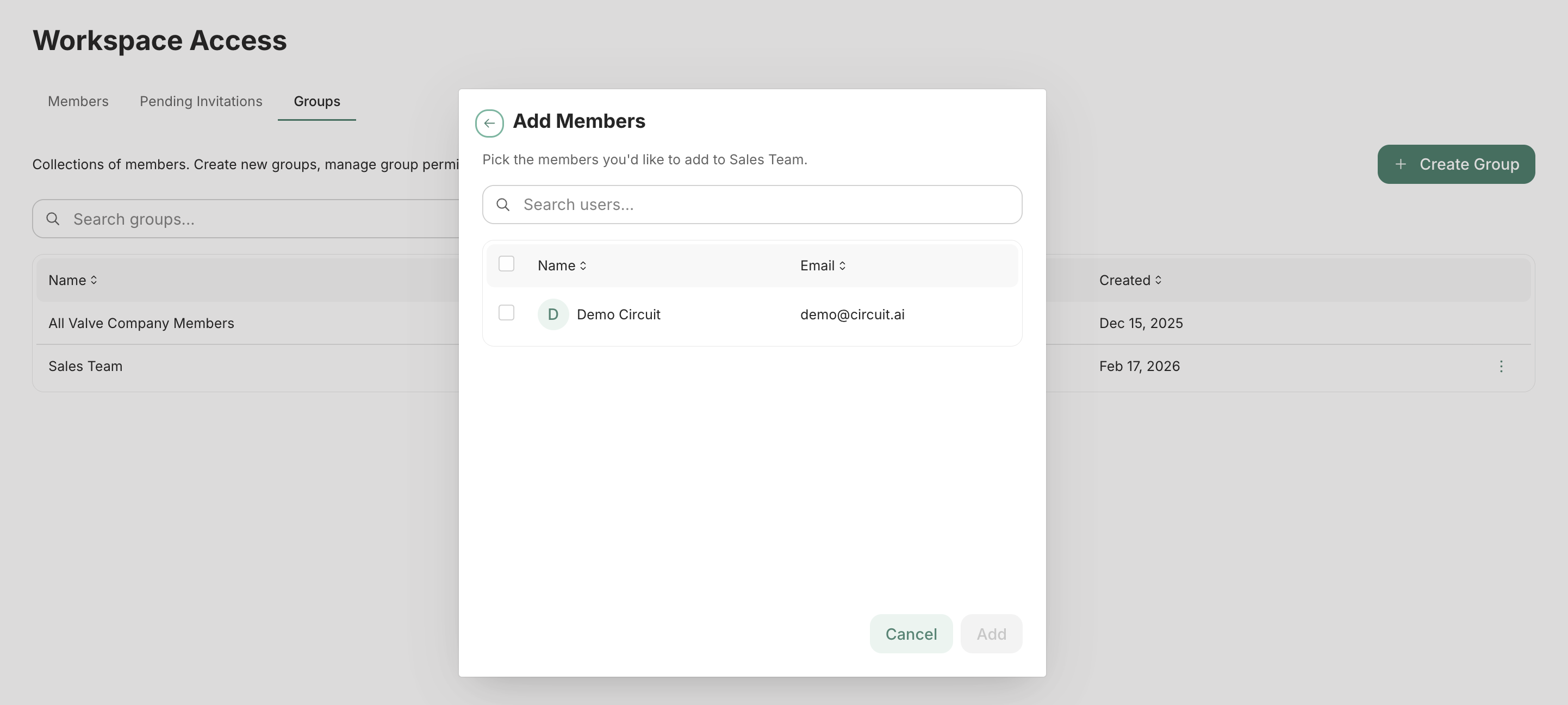
What Org Owners & Admins can do
- Create, rename, duplicate, and delete groups
- Add or remove members (internal or external)
- Assign Read / Edit / Admin roles to groups on Circuits
- Bulk-add users to groups via multi-select
- Track all group and membership changes with timestamps and actor attribution
Every organization also gets a default “All Organization Members” group. It’s automatically maintained, so you can grant baseline access in one step.
What all users can see
- Group membership across their organization
- Which groups (and people) have access to any Circuit they can access
- Clear visibility into who has access to what—and why
Permissions resolve in a straightforward way: the highest level of access wins.
Agent-Initiated Workflows: Trigger Chats from Any Event
Agents in Circuit are no longer limited to reacting inside a chat window. Admins can now configure Agents to trigger automatically based on arbitrary events inside Circuit or in integrated systems. This turns Agents from passive knowledge assistants into active workflow participants.
What this enables
Agent Admins can define triggers tied to:
- Application events inside Circuit (for example, a new file uploaded, a record updated, a form submitted)
- Events from integrated tools such as CRM, ticketing systems, or databases
- Webhook-based events from external systems
When the defined event occurs, Circuit can automatically:
- Initiate a new chat with the relevant Agent
- Pass structured event data into the Agent as context
- Generate a response using your knowledge base and configured actions
- Route that response to the appropriate destination
For example: If you have a HubSpot form on your website, you can configure a trigger so that whenever a new form submission is created, Circuit automatically:
- Starts a chat with your Sales Agent
- Provides the form data as structured input
- Generates a tailored response (e.g., qualification, product fit, pricing summary)
- Sends that response directly to the customer via email
This same pattern applies to support tickets, warranty claims, quote requests, compliance alerts, or any event that can be detected and passed into Circuit. The result is end-to-end automation: events become inputs, Agents reason over context and knowledge, and outputs are delivered automatically.
Microsoft Single Sign-On (SSO)
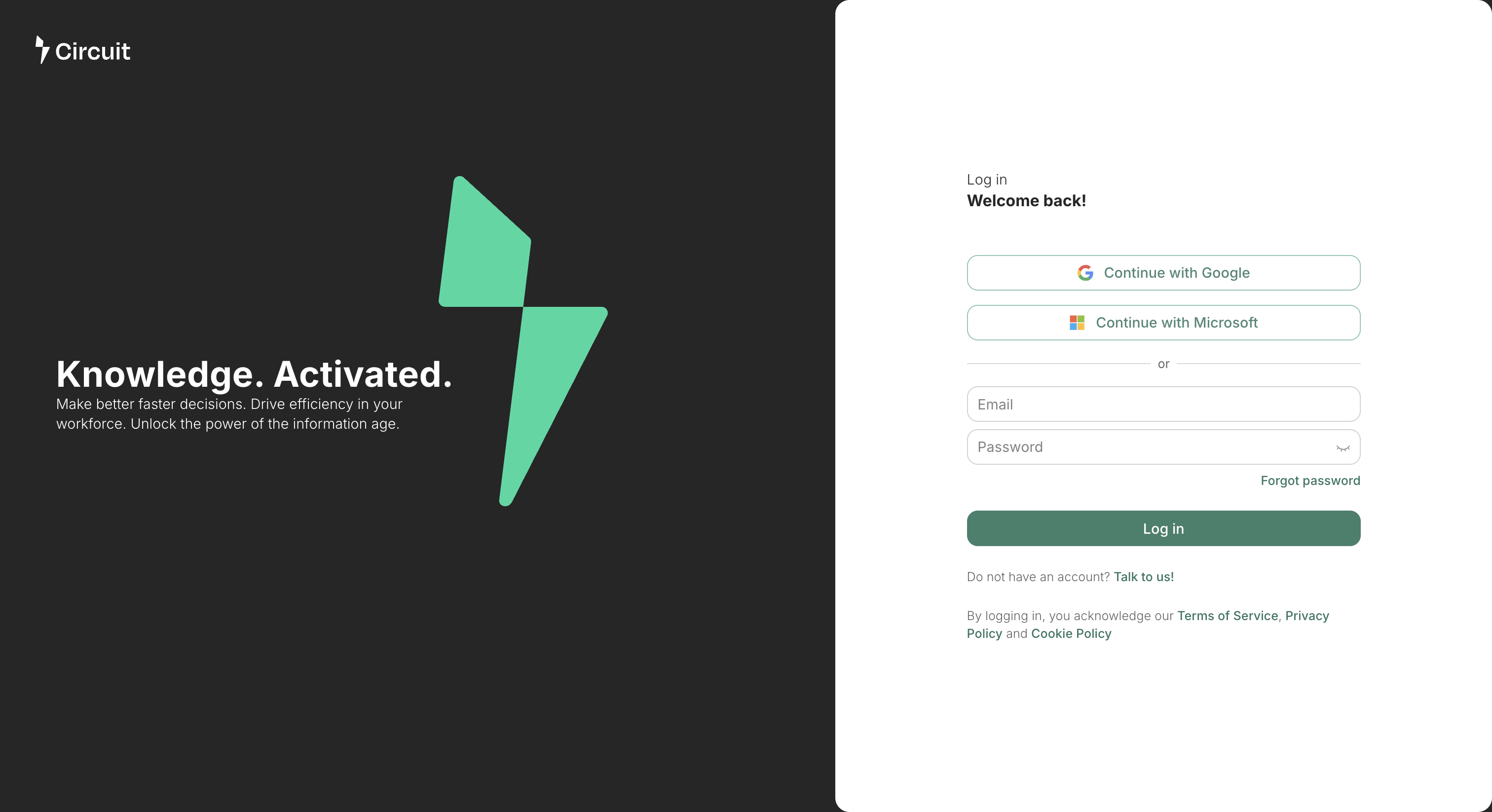
Enterprise identity is table stakes. Circuit now supports Sign in with Microsoft.
What this enables
One-click Microsoft-branded sign-in on login and signup
This helps Circuit meet enterprise IT and security requirements without adding friction for end users.
Built for the next phase of scale
Taken together, these features support a new class of deployments:
- Tens of thousands of users
- Fine-grained, auditable access control
- Deeper integration into existing enterprise systems
- Enterprise-grade identity and lifecycle management
More broadly, this reflects a shift: Circuit isn’t just a tool teams try—it’s infrastructure organizations depend on.
As always, these improvements came directly from customer feedback. If you’re rolling Circuit out at scale and have ideas, edge cases, or requests, we want to hear from you.
Onward and upward,
Jake Salomon
Product @ Circuit
.jpg)